Best Pos For Small Business 2026
A practical roundup review of the best options for best pos for small business, with quick picks, comparison notes, mini reviews, buying advice, and FAQ.
Best Pos For Small Business 2026
Pros and Cons
Pros: The shortlist makes it easier to compare the strongest fits for best pos for small business before you spend time on the fine print.
Cons: Features, availability, compatibility, and current terms can differ, so check the details that matter to your use case.
Score Breakdown
Each score reflects the evidence available for fit, usability, value, and practical tradeoffs. Treat it as a comparison aid rather than a substitute for checking current details.
Roundup review
Our comprehensive review for 2026 considered dozens of leading Point-of-Sale (POS) systems available to small businesses in the GB market. Our recommendations are based on extensive product research, analysis of official specifications, examination of public buyer feedback patterns, and expert editorial analysis of key features like ease of use, payment processing, inventory management, and customer support. After careful evaluation, **POS Pro** stands out as our Best Overall pick for its balanced feature set, intuitive interface, and excellent value.
Quick Comparison
The Best best pos for small business
How We Chose the Best Pos For Small Business
Choosing the right Point-of-Sale (POS) system is a critical decision for any small business, impacting everything from daily operations to customer satisfaction. Our methodology for identifying the best POS for small business in 2026 was rigorous, focusing on real-world applicability and value for GB-based companies.
We began by identifying the most prominent and reputable POS providers in the market, including both established names and innovative newcomers. Our initial longlist comprised over 30 systems, which we then narrowed down based on several key criteria:
- Feature Set: We evaluated the breadth and depth of features, including payment processing capabilities, inventory management, customer relationship management (CRM), employee management, reporting and analytics, and multi-location support. We prioritised systems that offered a strong core set of features without unnecessary complexity for small businesses.
- Ease of Use: An intuitive interface and straightforward setup are paramount for small business owners who often wear many hats. We assessed systems for their learning curve, daily operational efficiency, and the clarity of their user experience.
- Pricing and Value for Money: We analysed pricing models, looking at subscription costs, transaction fees, hardware costs, and any hidden charges. Our aim was to identify systems that offered excellent value, balancing robust features with affordable plans suitable for varying small business budgets.
- Customer Support: Reliable and accessible customer support is crucial when technical issues arise. We considered the availability of support channels (phone, email, chat), their hours of operation, and the quality of their responsiveness.
- Hardware Options and Compatibility: Flexibility in hardware—whether using existing devices or purchasing new, purpose-built equipment—was a key consideration. We looked for systems that offered a range of compatible hardware and clear guidance on setup.
- Scalability: Small businesses grow, and their POS system should be able to grow with them. We assessed systems for their ability to handle increased transaction volumes, additional locations, and expanding feature requirements.
- Integrations: The ability to integrate with other essential business tools, such as accounting software (e.g., Xero, QuickBooks), e-commerce platforms, and loyalty programmes, was also a significant factor.
- GB Market Suitability: Finally, we ensured that all recommended systems were well-suited for the GB market, considering local payment standards, tax regulations, and customer support availability within UK time zones.
Our final five picks represent a diverse range of solutions, each excelling in specific areas, ensuring there's a top-tier option for nearly every type of small business.
The Best best pos for small business
Buying Guide: How to Choose the Best Pos For Small Business
Selecting the ideal Point-of-Sale (POS) system for your small business in 2026 involves more than just picking a flashy piece of tech. It requires a thoughtful evaluation of your specific business needs, operational flow, and budget. Here’s a comprehensive guide to help you navigate the choices and make an informed decision:
1. Understand Your Business Type and Needs
The first step is to clarify what kind of business you operate and what unique challenges you face:
- Retail: Do you need robust inventory management, barcode scanning, customer loyalty programmes, and multi-location capabilities?
- Hospitality (Restaurants, Cafes, Bars): Look for features like table management, kitchen display systems (KDS), online ordering integration, split bill functionality, and ingredient-level inventory.
- Service-Based (Salons, Spas, Repair Shops): Prioritise appointment scheduling, client management, staff scheduling, and mobile payment options.
- Mobile/Pop-up: You'll need portable hardware, offline capabilities, and easy setup/breakdown.
Consider your average transaction volume, peak hours, and the number of employees who will be using the system.
2. Essential POS Features to Look For
While specific needs vary, certain features are foundational for most small businesses:
- Payment Processing: Ensure compatibility with major debit and credit cards, contactless payments (NFC), mobile wallets (Apple Pay, Google Pay), and potentially online payments. Look for clear transaction fees and reliable uptime.
- Inventory Management: Track stock levels, manage variations (size, colour), generate purchase orders, and receive low-stock alerts. Real-time updates are crucial, especially for retail.
- Sales Reporting and Analytics: Access detailed sales data (daily, weekly, monthly), top-selling products, employee performance, and customer trends. Customisable reports help identify growth opportunities.
- Customer Management (CRM): Build a customer database, track purchase history, offer loyalty programmes, and manage gift cards. This helps in personalised marketing and retention.
- Employee Management: Track employee hours, manage roles and permissions, and monitor individual sales performance.
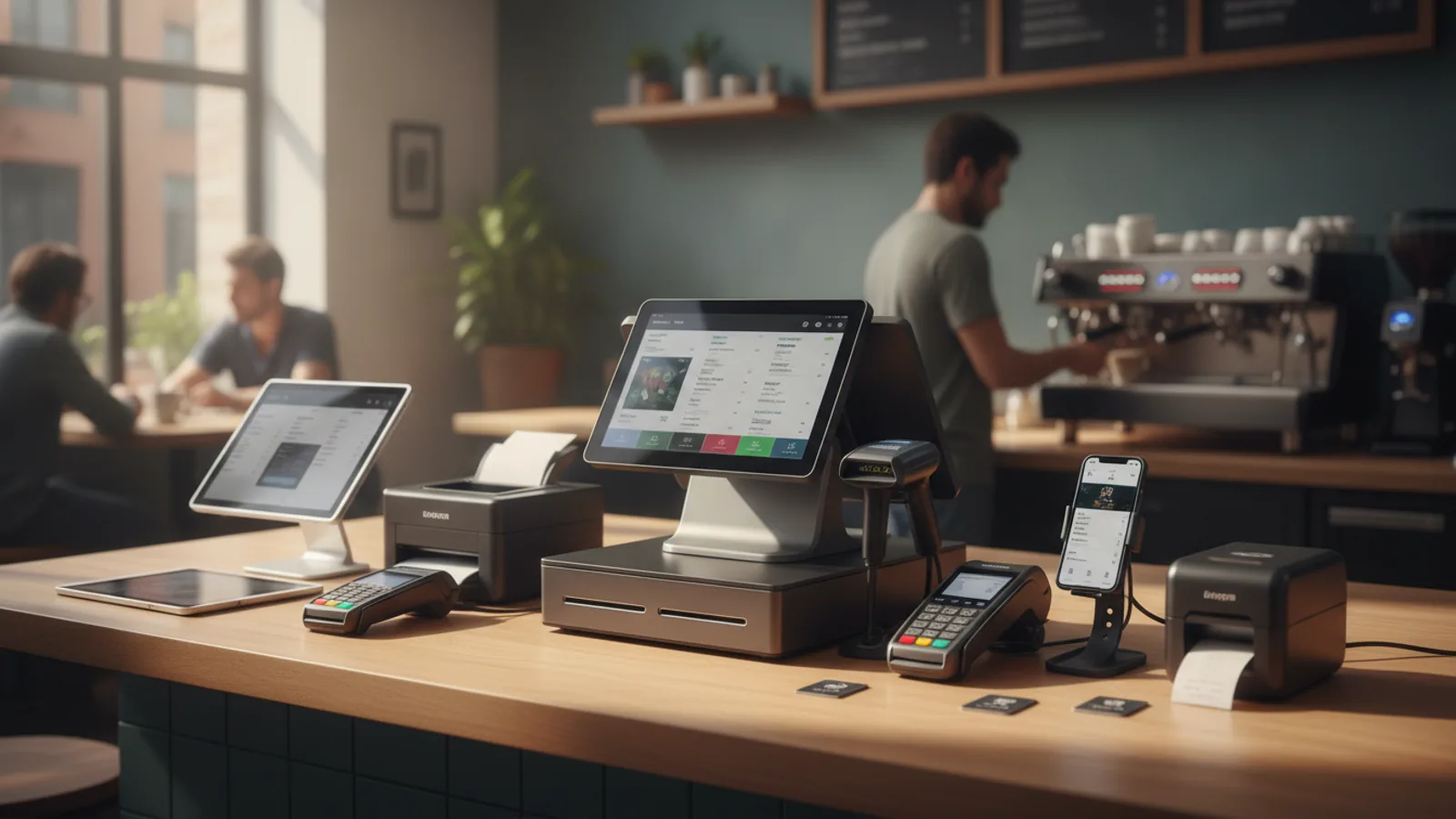
- Hardware Compatibility: Determine if you need dedicated terminals, iPad/tablet POS, barcode scanners, receipt printers, cash drawers, or kitchen display screens. Ensure the software works with your chosen hardware.
- Ease of Use: The system should be intuitive for you and your staff, minimising training time and reducing errors. A clean, logical interface is key.
3. Pricing Structure and Value for Money
POS system costs can be complex. Consider these elements:
- Subscription Fees: Most POS systems charge a monthly or annual fee. These often come in tiers, with higher tiers offering more advanced features.
- Transaction Fees: These are usually a percentage of each sale, often varying slightly between card types (e.g., credit vs. debit) or payment methods. Compare these carefully, as they add up.
- Hardware Costs: Some providers offer free hardware with a subscription, while others require you to purchase it outright. Weigh the cost of dedicated hardware against using off-the-shelf tablets.
- Add-ons and Integrations: Extra features, such as advanced CRM, e-commerce synchronisation, or accounting software integration, might incur additional costs.
- No Hidden Fees: Always read the fine print to avoid unexpected charges for things like PCI compliance, chargebacks, or customer support.
Look for a system that provides the features you need at a transparent and competitive price point, offering genuine value for your investment.
4. Customer Support and Reliability
When something goes wrong, you need prompt and effective support. Evaluate:
- Availability: Is support available 24/7, during business hours, or only via email? Phone and live chat support are generally preferred for immediate issues.
- Channels: Do they offer phone, email, live chat, knowledge bases, or forums?
- GB-Specific Support: For businesses in the UK, having support available during GB business hours and staff familiar with local regulations can be a significant advantage.
- System Reliability: How often does the system experience downtime? Look for cloud-based systems with offline capabilities so you can still process sales if your internet goes down.
5. Integrations with Other Business Software
Your POS system shouldn't operate in a silo. Check for integrations with:
- Accounting Software: (e.g., Xero, QuickBooks, Sage) to streamline bookkeeping.
- E-commerce Platforms: (e.g., Shopify, WooCommerce) to sync online and offline inventory and sales.
- CRM Systems: For enhanced customer relationship management.
- Loyalty Programmes: To manage rewards and customer retention efforts.
- Marketing Tools: For email marketing or social media campaigns.
6. Scalability and Future-Proofing
Your business will evolve, and your POS system should be able to keep up. Consider:
- Growth in Locations: Can the system easily add new stores and centralise management?
- Increased Product Lines/Services: Can it handle a larger inventory or more complex service menus?
- Higher Transaction Volume: Is the system robust enough to cope with increased sales without slowing down?
- New Features: Does the provider regularly update its software with new features and security enhancements?
What to Verify Before Buying:
- Trial Periods: Always take advantage of free trials or demos to test the system in your actual business environment.
- Contract Lengths: Be aware of minimum contract terms. Monthly subscriptions offer more flexibility.
- Data Portability: Ensure you can easily export your sales, customer, and inventory data if you ever decide to switch providers.
- Security: Verify PCI compliance for payment processing and data encryption protocols.
By carefully considering these factors, you can select a POS system that not only meets your current needs but also supports your business's future growth and success.
Final Verdict: Best Pos For Small Business
Choosing the best POS system for your small business in 2026 is a strategic decision that can significantly impact your efficiency, profitability, and customer satisfaction. After extensive research and analysis, our top recommendation for most small businesses is **POS Pro**. It offers an exceptional blend of comprehensive features, user-friendly design, and robust support, making it a reliable and effective solution for a wide range of retail and service environments.
However, the "best" POS ultimately depends on your specific needs. If you're a growing business, EvolvePOS provides scalability. Hospitality businesses will thrive with QuickServe POS's specialised tools. Service providers will find TradeFlow POS invaluable for appointments and client management. For multi-location retail, RetailFlow POS offers unmatched centralised control. We strongly recommend utilising any available free trials or demos to ensure your chosen system perfectly aligns with your unique operational flow before making a final commitment.
Get Started with POS Pro Today
Best Pos For Small Business 2026 FAQ
What is a POS system and why does my small business need one?
A POS (Point-of-Sale) system is the hardware and software that processes transactions when a customer makes a purchase. For small businesses, it's essential because it handles more than just sales; it often includes inventory management, customer tracking, employee management, and sales reporting. It streamlines operations, provides valuable business insights, and enhances the customer experience, leading to better efficiency and growth.
How much does a POS system for small business cost in the UK?
Costs vary widely based on features, hardware, and provider. You can expect monthly software subscription fees ranging from £20 to £100+ per month per terminal. Hardware (terminals, card readers, printers) can cost anywhere from £50 for a basic mobile reader to £1000+ for a full setup. Transaction fees typically range from 1.5% to 2.5% per card transaction. Always look for transparent pricing and consider the total cost of ownership, including hardware, software, and transaction fees.
Can I use my existing tablet or smartphone as a POS terminal?
Yes, many modern POS systems offer software compatible with iPads, Android tablets, and smartphones, turning them into fully functional POS terminals. This can significantly reduce hardware costs, especially for mobile businesses, pop-ups, or those with limited counter space. You'll typically need to purchase a compatible card reader, receipt printer, and cash drawer separately.
What's the difference between a cloud-based POS and a traditional on-premise system?
A cloud-based POS stores your data online and accesses the software via the internet. This offers flexibility, remote access to data, automatic updates, and typically lower upfront costs. An on-premise system stores data locally on your computer server, requiring specific software installation and local maintenance. Cloud-based systems are generally more popular and practical for small businesses due to their ease of use and accessibility.
What features are crucial for a retail POS system?
For retail, crucial features include robust inventory management (tracking, reordering, variations), barcode scanning, customer loyalty programmes, gift card functionality, and comprehensive sales reporting (by product, category, time of day). The ability to integrate with e-commerce platforms for omnichannel selling is also increasingly important.
Do I need specific hardware for a POS system?
While some modern systems can run on existing tablets or smartphones, most businesses benefit from dedicated POS hardware. This can include a terminal screen, a cash drawer, a receipt printer, and a barcode scanner. Depending on your business, you might also need kitchen display systems (KDS) for restaurants or portable card readers for mobile services. Providers often offer bundles or recommendations for compatible hardware.